

How much should you actually spend on ads?
Most ad budget guides give you a range. The right number comes from two limits: the most your margin can pay for a customer, and the least Google or Meta need to learn. Here is how to work out both for an Australian business, what to do when the floor sits above the ceiling, and why a smaller budget is never the answer to that problem.
Your ads stopped working. Here is the order to check things in
When Google or Meta ads stop working, most people start changing the ad account, which is usually the most expensive place to start and rarely where the cause sits. Here is the outside-in order we use: business numbers, demand, the page, the offer, frequency, and only then the campaign. Check cheap and reversible first, expensive last.
What Q4 actually teaches you about the rest of the year
Q4 is the densest and most honest dataset your business collects all year, and most businesses read the revenue line and throw the rest away. Here is what the quarter can tell you about product margin, creative fatigue, demand creation and your operating ceiling, and why February and March are the cheapest weeks to act on any of it.

Creative is the constraint in Q4, not budget
More budget cannot fix tired creative, and new creative uploaded in November arrives with no delivery history at the worst possible moment. Here is how Meta's retrieval stage actually treats a fresh asset, why genuinely different ideas beat asset volume for Australian budgets, and what to fix in your creative measurement before the expensive weeks of Q4 begin.
Why your Q4 budget should not be one number
Every guide says model scenarios and hold a reserve. None explain why businesses set one number anyway. In Australia the reason is structural: the financial year ends in June, so the peak quarter is funded by a figure approved five months early. Plus the marginal ROAS problem that makes a single budget fail.
What to fix before Q4, and what to leave alone
Every Q4 checklist tells you what to fix. Almost none tell you what to stop touching, or when the window closes. Every change resets learning, which costs a week in September and the quarter in November. What to fix now, what to freeze from mid-October, why September decides Q4, and the Australian dates most guides miss.
What Most Businesses Get Wrong Before They Ever Run an Ad
Every agency gives the same Google versus Meta framework, and it is not where businesses lose money. Meta overstates itself by two to three times while last-click attribution hands its branded search conversions to Google. Here is why that makes you cut the wrong channel, and what to fix before you launch either one.
What Most Businesses Get Wrong Before They Ever Run an Ad
Ads amplify a business, they do not create one. A plain-English guide to what needs to be true before you spend a dollar on paid: a clear offer, a page built to convert, tracking you can trust, and a real follow-up process. Plus the honest signs you are not ready yet.

When Should You Actually Scale Your Ad Spend?
Most people ask whether their ads are performing well enough to scale. That is the wrong question. A plain-English guide to scaling ad spend: the three conditions that must hold first, why 15 to 20 percent steps beat doubling, and the stop rule to set before you increase anything.
How to Tell If Your Ad Agency Is Actually Doing a Good Job
Your agency sends a report every month, but is it working? A plain-English guide to judging an ad agency: the green flags that signal real competence, the red flags that cost businesses millions, and the four questions any good agency can answer instantly.
LTV:CAC: The One Number That Should Be Running Your Growth
CAC tells you what a customer costs. ROAS flatters you. LTV:CAC tells you whether growth is actually profitable. A plain-English guide to the ratio that should run your ad spend: the 3:1 benchmark, payback periods, why it changes by channel, and the measurement most businesses miss.
Attribution in Plain English: Why Google and Meta Both Take Credit for the Same Sale
Google says 80 sales, Meta says 70, Shopify says 100. Nobody is lying. A plain-English guide to marketing attribution: view-through windows, self-attribution, why platform ROAS double-counts, and the one blended number that actually tells you the truth.
For ecommerce on Google, margin is the number to track
Your Google Ads is optimising on revenue. Your ecommerce business is running on margin. The two rarely agree, and the account is scaling on the wrong one. A plain-English guide to the tracking foundation underneath every profitable ecommerce Google Ads account: Enhanced Conversions, server-side, Consent Mode, and the single change that turns Smart Bidding into a profit machine.
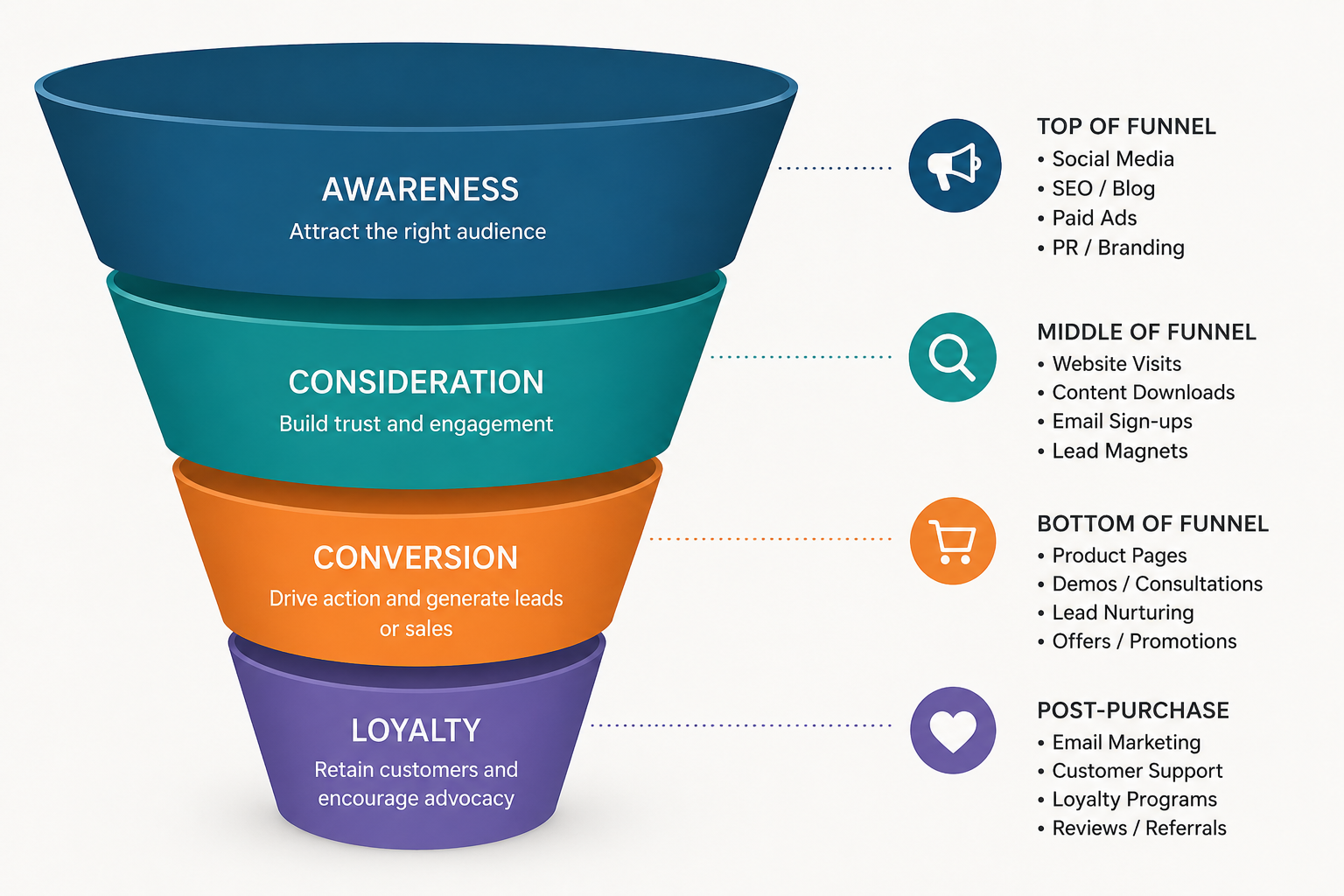
Your ecommerce site has four conversion rates, not one
The 2.5% conversion rate every ecommerce founder tracks is an average of four completely different rates. Improving "the site" without knowing which one is leaking is why most redesigns don't move the number. A plain-English guide to unbundling ecommerce conversion, diagnosing the actual stage that is leaking, and fixing the right thing.

For ecommerce on Google, your product feed is the campaign
Most ecommerce brands optimise the account and ignore the feed. It is the wrong way around. On Google in 2026, the product feed does most of the work Shopping and Performance Max used to hand to the media buyer. A plain-English guide to why the feed is the campaign, what to fix inside it, and the account decisions that still actually matter.

For ecommerce on Meta, creative is the only lever that still scales
Meta's algorithm has become genuinely good at finding buyers without your help, so your audience targeting barely moves the needle anymore. What does is what you put in front of those buyers. A plain-English guide to scaling ecommerce on Meta in 2026, why creative is now the dominant performance lever, and what a good creative system actually looks like.

Your CRM is the most important advertising tool you own
Meta and Google know who clicked and who filled in a form. They have no idea who became a customer. That information lives in your CRM, and until you send it back, your ad platforms keep optimising for the wrong thing. A plain-English guide to lead tracking, offline conversion tracking, and the measurement foundation underneath every great lead-gen account.
Your ads are working. Your website is leaking leads.
Your ads are bringing the right traffic. So why does the sales pipeline keep filling with tyre-kickers? A plain-English guide to the foundations of a lead-gen website built to convert qualified leads, not just form fills. Covers landing pages, forms, CTAs, speed, and the seconds after conversion.
Why most Google Ads leads look cheap and never close
Most Google Ads lead campaigns produce cheap form fills and lukewarm pipeline. Here is why. A plain-English guide to Search vs Performance Max vs Demand Gen, Smart Bidding for lead gen, Enhanced Conversions for Leads, and the measurement piece almost no one connects.
Meta lead generation: how it actually works, and where it quietly breaks
Meta lead generation is a system, not a form. A plain-English guide to instant forms vs website leads, volume vs conversion-leads optimisation, the CRM and Conversions API feedback loop, and why cheap leads rarely close.